Updated 07/23/2026
Introduction
"7 kW or 22 kW?" is one of the first questions that comes up in any charging station deployment project. However, the answer doesn't just depend on the station itself: it depends on the vehicle, the building's electrical infrastructure, and the intended use. This guide explains the technical differences, details the often-overlooked role of the onboard charger, and provides concrete criteria to help you choose the right configuration.
The technical difference: single-phase vs. three-phase
The difference between 7 kW and 22 kW comes down to one thing: the number of electrical phases used. Think of it like water pipes:
- Single-phase ⇒ a single pipe supplies the station
- Three-phase ⇒ three pipes work in parallel. More pipes = more power.
Most individual homes are single-phase; office buildings, hotels, and industrial sites are generally three-phase. In practical terms, a 22 kW station connected to a single-phase installation will automatically be limited to 7.4 kW.
Before any deployment, checking the power supply available on-site is essential.
Cables: what you need to know
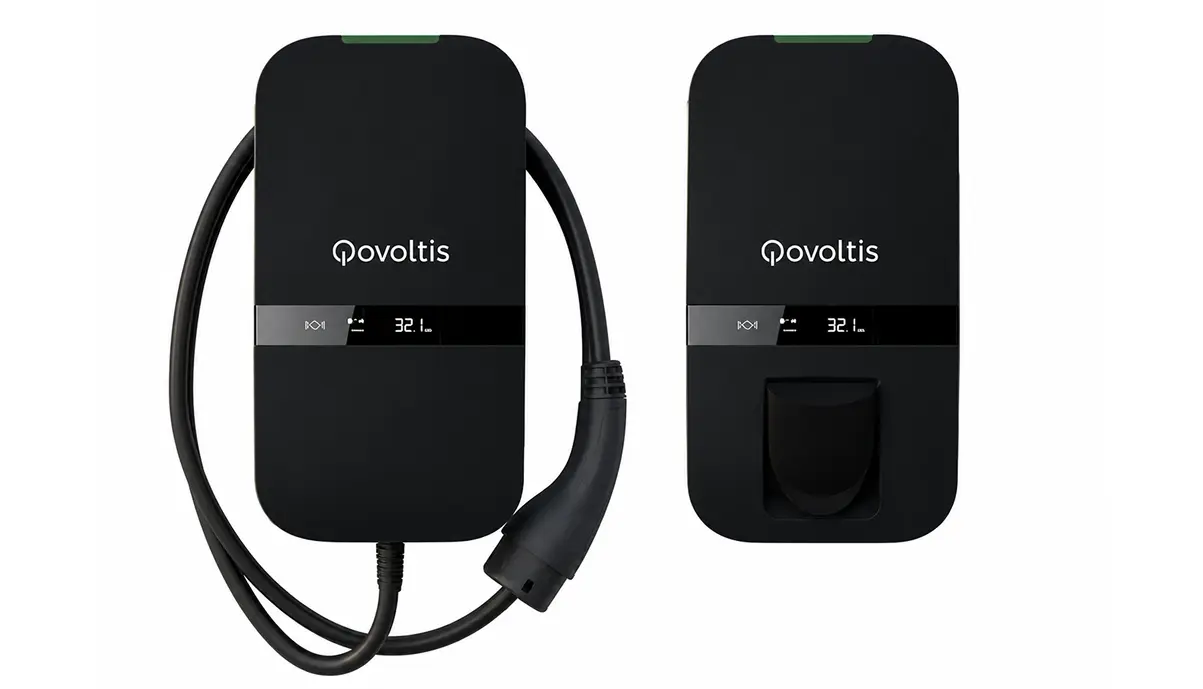
For AC (alternating current) charging, stations are available in two main configurations.
Station with tethered cable : the cable is attached to the station and ends with a Type 2 connector on the vehicle side. This configuration is particularly well-suited for regular users (at home, in an assigned parking space, or for a fleet of identified vehicles), as you simply plug in the cable without having to carry one around. This is the choice typically made for the Qobox mini, equipped with a 5-meter Type 2 cable.
Charging station with Type 2 socket : the station is equipped with a Type 2 socket and the user uses their own Type 2 to Type 2cable. This solution offers greater flexibility to accommodate different users and vehicles. It is the preferred standard for public roads and many parking lots open to the public. The Qobox P adopts this configuration, with a cable available as an option.
In France, as in most European countries, the standard vehicle-side connector for AC charging is the Type 2, defined by the IEC 62196-2standard.
The onboard charger: the real limiting factor
The actual charging power is not set by the station, but by the negotiation between the station and the vehicle's onboard charger (OBC) . The station proposes; the vehicle disposes.
Practical result: a Tesla Model 3, whose onboard charger is limited to 11 kW AC, will charge at 11 kW on a 22 kW station, not at 22 kW.
For a mixed fleet, the key is to choose a charging station power output that matches the actual onboard chargers of the vehicles deployed, rather than the theoretical maximum power.
7 kW or 22 kW: which use case?
A 7.4 kW charging station is sufficient for the vast majority of long-term parking scenarios. Over 8 hours, it delivers up to 59 kWh, which covers a full charge for almost every electric car on the market. For a workplace parking spot or an employee's home, it covers all daily charging needs.
A 22 kW charging station becomes relevant as soon as parking time is reduced. For a visitor, a client, or a pool vehicle shared between multiple users: if the stopover time is short (1 to 3 hours), higher power allows for more kWh to be delivered (provided the vehicle supports it).
Qovoltis charging stations
Qobox mini
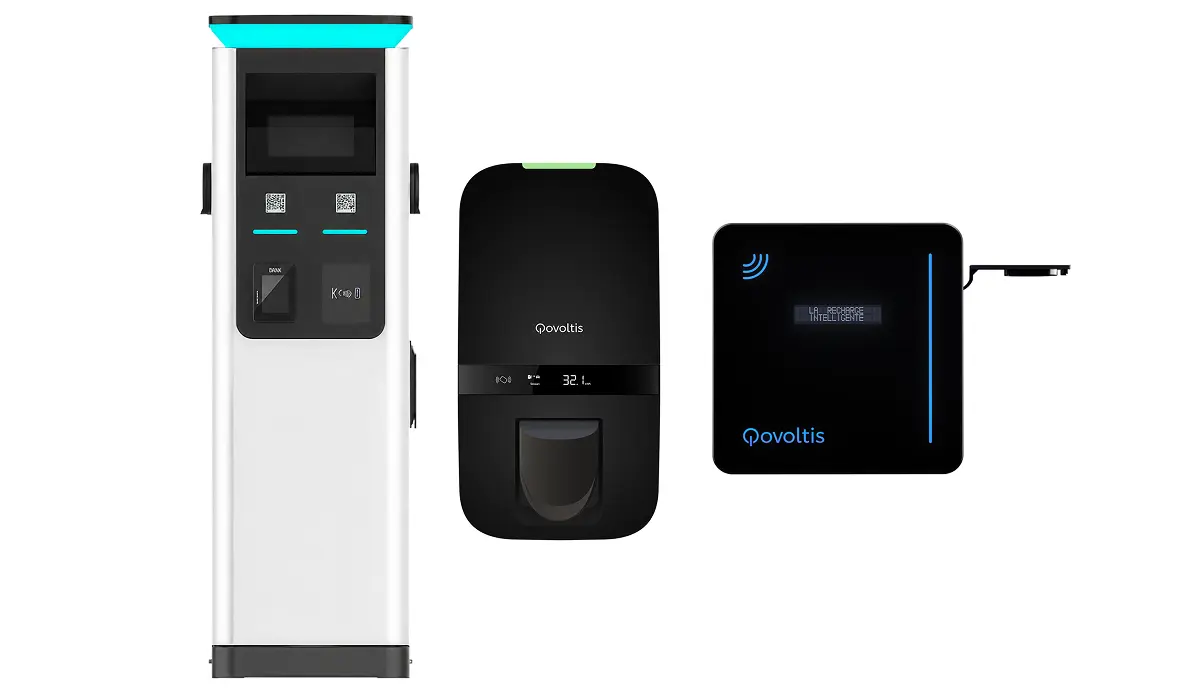
Ultra-compact wall-mounted charging station available with an attached cable (5 m) or T2 socket, up to 22 kW in single and three-phase. Made in France, 2-year warranty, and compatible with Linky for reimbursement at actual cost and managed via Qockpit. The Qobox mini is ideal for employee homes and small corporate parking lots.
Qobox P
Available in 7.4 kW or 22 kW, MID certified for consumption-based billing, with dynamic load balancing and Ethernet and 4G connectivity. Designed for corporate parking lots and demanding fleets, 100% European manufacturing, 7-year warranty.
Qobox E
The Qobox E charges 2 vehicles simultaneously at either 2×7.4 kW (single-phase) or 2×22 kW (three-phase). This pedestal-mounted charging station for outdoor use features a 7" touchscreen with credit card, RFID, and QR code payment options. It is the ideal solution for hotel parking lots.
FAQ
Can a 22 kW charging station be installed in a private home?
Technically yes, provided you have a three-phase power supply. Since most private homes are single-phase, the station will be limited to 7.4 kW, offering no real benefit from a 22 kW configuration.
Is 7 kW enough to charge an electric car overnight?
Yes, in almost all cases. Over 8 hours, a 7.4 kW station delivers up to 59 kWh, which is well beyond the usable capacity of most onboard batteries (50 to 77 kWh for common fleet models).
Is a 22 kW station faster for all vehicles?
No. It only provides a speed advantage for vehicles equipped with an onboard three-phase charger. A vehicle limited to 7.4 kW will charge at exactly the same speed on a 7 kW station as it would on a 22 kW station.
Which cable should I use with my charging station?
In France and Europe, the standard is the Type 2 (T2-T2) cable for Mode 3 AC charging. If your station has an attached cable (like the Qobox mini), no additional cable is needed. With a T2 socket (like the Qobox P), a 5 to 7.5m T2-T2 cable is required.
Key takeaways
Choosing between 7 kW and 22 kW is not just about budget or technology; it is about ensuring the station matches your vehicle and usage needs. For a fleet with long-term parking, 7.4 kW is sufficient and cheaper to install. For parking with high turnover or an evolving fleet, 22 kW offers the necessary flexibility (provided the vehicles support it). In both cases, Qovoltis stations include smart charging via Qockpit to manage power in real time and optimize costs.
Learn more
- Cost of installing a commercial EV charging station: 2026 complete guide
- Home EV charging stations for employees: 2026 installation and tax guide
- Commercial EV charging stations: 2026 requirements, costs, and solutions
- Qovoltis business solutions