Updated 07/16/2026
Introduction
Electrifying a fleet quickly raises a practical question: what is the real cost of installing charging stations at your business? The answer goes beyond the list price of the unit. In 2026, the charging station itself accounts for only 40% to 60% of the installation budget; the rest is absorbed by infrastructure work, including civil engineering, cabling, electrical panel upgrades, and occasionally grid connection fees. On top of this, there are recurring costs that are often underestimated, as well as a subsidy framework that has been significantly overhauled since 2023.
This guide outlines realistic price ranges by configuration, long-term costs to anticipate, and the current state of available subsidies in 2026.
How much does a business charging station cost?
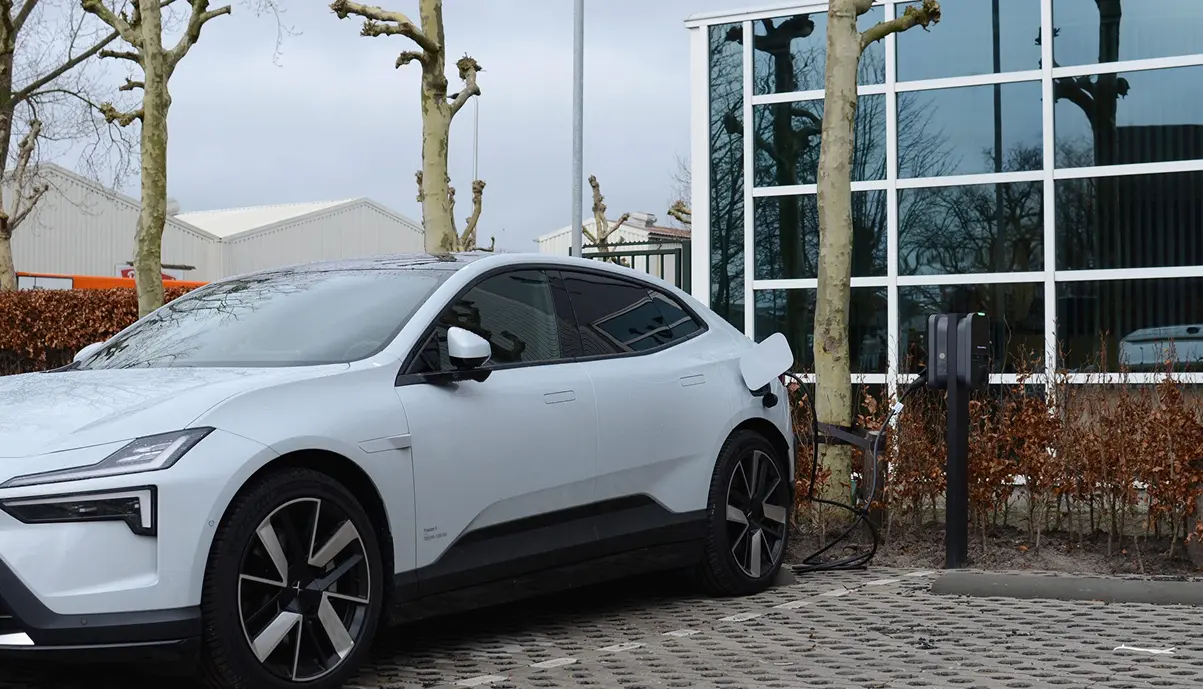
For businesses, the power rating and type of station—alternating current (AC) or direct current (DC)—are the primary cost drivers. The vast majority of needs are met by 7.4 to 22 kW AC stations, as vehicles are parked for several hours, making charging speed less of a constraint.
What really drives price variations: the charging station itself only accounts for 40% to 60% of the total budget. The three main cost drivers are civil engineering (trenching, cabling, safety protections, signage), electrical panel upgrades, and grid connection fees if your current power capacity is insufficient. The further the station is from the main low-voltage distribution board, the higher the budget.
What about home charging for employees?
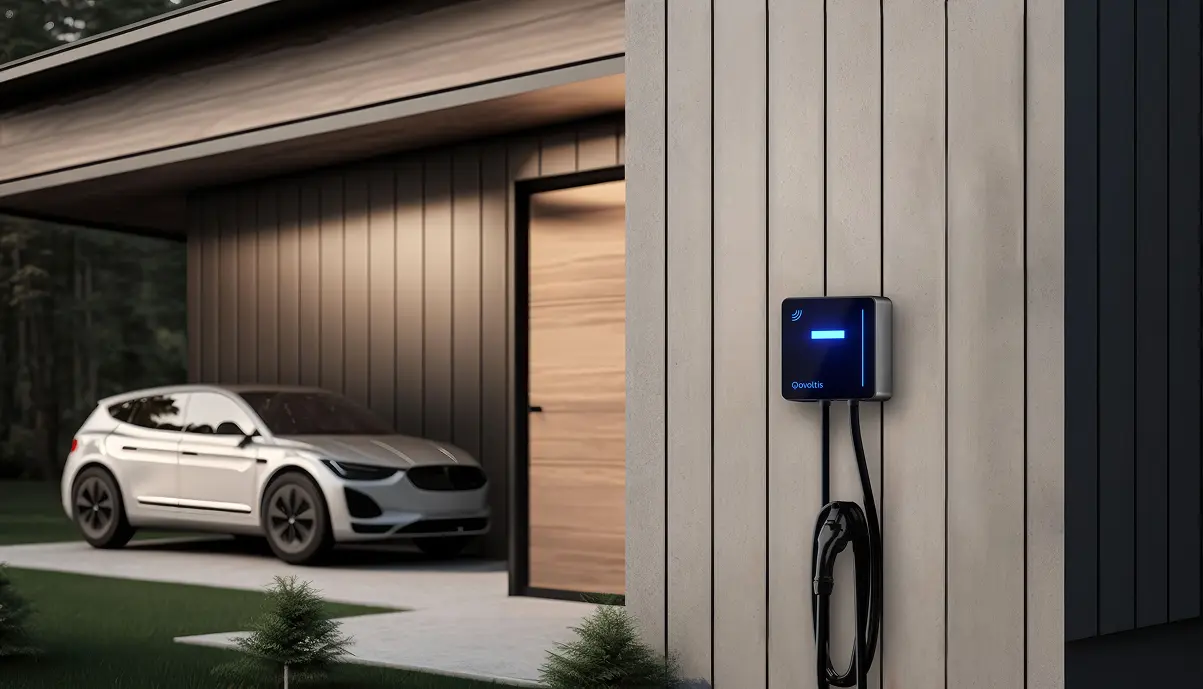
Installing a certified EV charging station at an employee's home costs between €1,500 and €2,500 (unit + installation), which is significantly less than installing one in a company parking lot. There is less civil engineering involved and, in most cases, no need for grid connection upgrades.
However, the real benefit isn't choosing between the office or the home; it's combining both. By charging at the office during the day and at home at night, vehicles charge wherever they are parked at the lowest possible cost. The result: up to €840 (excl. tax) in savings per vehicle, per year.
With Qovoltis, both areas are managed from a single platform. Charging stations on-site and at employees' homes are controlled via Qockpit : real-time smart charging to ensure you never exceed your subscribed power, centralized supervision of the entire fleet, and automatic distinction between professional and personal use for every session via the mobile app. At home, the connection to the Linky meter precisely measures the kWh consumed for professional use and calculates reimbursement based on the actual cost of electricity. URSSAF-compliant statements are generated automatically, with no manual entry or potential for disputes, in accordance with the 2026 BOSS.
CTA: Looking to equip your sites and employees with charging stations? Get your free quote within 48 hours.
Recurring costs to factor in from the start
The installation price is only part of the equation. Two recurring items should be budgeted for from the beginning.
Grants and financing in 2026
The Advenir program: the reality
The Advenir program is often cited as a grant accessible to businesses, but the rules have changed significantly. Two key points to remember:
- Since January 1, 2023, charging stations intended for fleets and employees in closed private parking lots are no longer eligible.
- Since January 1, 2026, premiums for automotive services (dealerships, garages) have also been eliminated (Advenir, automotive services, fleets, and employees).
In 2026, the ADVENIR program remains available for infrastructure intended for heavy-duty vehicles and coaches, with coverage of up to 50% of eligible costs. For charging points, the premium is capped between €2,200 and €15,000 excluding tax per charging point, depending on the power of the station.
For large-scale projects, electrical connection infrastructure for depots can benefit from specific aid of up to €960,000 excluding tax for installations of 8,000 kVA or more. Charging infrastructure installed on public roads remains eligible for aid covering 30% of eligible costs, up to a limit of €1,000 to €9,000 excluding tax per charging point depending on the power.
For a standard private company parking lot intended for employees or the fleet, there is no longer any aid according to the Advenir 2026 funding amounts.
Tax benefits
A charging station installed for business use is depreciable and tax-deductible from business income. VAT is recoverable if the invoice is issued to the taxable company, according to impots.gouv.fr.
Long-term leasing (LLD)
Long-term leasing allows you to accelerate deployment without tying up capital. It spreads the investment over 3 to 5 years, covering charging stations, infrastructure, and services. The project can be cash-flow positive from the first month if the savings generated exceed the monthly payments.
Read our article Workplace charging stations to learn everything you need to know about installing charging stations at your company.
The Qovoltis solution
Qovoltis deploys turnkey solutions for company parking lots and employee homes in less than 60 days on-site and 30-day home trial. A technical audit is conducted upfront, free of charge, resulting in a quote within 48 hours that covers all relevant sites or homes.
The smart charging via Qockpit adjusts power in real time: multiple vehicles can charge simultaneously without exceeding your subscribed power limit, avoiding the need for costly electrical upgrades in most cases. Qockpit provides centralized supervision of all charging stations, automated billing, and remote management.
Financing is available through BNP Paribas via long-term rental or leasing agreements over 3 to 5 years, covering charging stations, infrastructure, and services: response within 48 hours.
For more information on the Qovoltis solution, check out our articles on Corporate charging stations and Charging stations for employee homes.
FAQ
How much does a charging station for a business cost?
In 2026, expect to pay €2,000 to €4,000 excl. tax per AC charging point, installation included. The charging station accounts for 40% to 60% of this budget; the remainder covers civil engineering work, cabling, and electrical upgrades. Only an on-site quote can provide an accurate estimate.
Does the Advenir program still fund charging stations for fleets and employees in 2026?
No. Advenir has not funded charging stations in private corporate parking lots for fleets or employees since January 1, 2023. The program remains available for parking lots open to the public and for charging stations intended for heavy-duty vehicles.
Can charging stations be financed through long-term leasing?
Yes. Qovoltis offers financing via BNP Paribas through long-term leasing or leasing with an option to purchase over 3 to 5 years, covering charging stations, infrastructure, and services. Simplified application process with a response within 48 hours.
Is my parking facility subject to legal requirements?
Since January 1, 2025, existing non-residential buildings with more than 20 parking spaces owned by companies with over 250 employees (balance sheet > €43M and/or turnover > €50M) must have at least one charging point for every 20 spaces, according to service-public.fr. Read our article on the LOM law to learn more.
Key takeaways
In 2026, an office charging station costs between €2,000 and €4,000 (excl. tax) per AC charging point, installation included. The station itself accounts for only 40% to 60% of the budget: infrastructure work makes the difference. To control costs, the key is to anticipate load management to avoid increasing your subscribed power, phase the deployment, and not rely on Advenir subsidies for private employee parking.
Charging at employees' homes is not a secondary option: 80% of fleet charging takes place there. Structuring this aspect with IRVE-certified deployment and Linky traceability is the most effective way to optimize your TCO.
Learn more
- Charging stations at employees' homes: 2026 installation and tax guidelines
- Corporate charging stations: 2026 requirements, costs, and solutions
- Qovoltis corporate solutions
- Our case studies
Sources and references
- Avere-France — 5th semi-annual public charging price barometer, November 2025
- service-public.fr — Charging infrastructure: obligations for businesses
- Advenir — Grant amounts by incentive type
- Advenir — Automotive services, fleets, and employees
- Qovoltis — Business solutions
- BOSS 2026 — Benefits in kind, provision of a charging station
- impots.gouv.fr — Deduction from business income