Updated on 09/17/2026
This article takes the opposite approach to standard installation guides: you already have charging stations, and you need to decide what to do with them.
Why the question of replacement is arising today
In 2026, four triggers come up most often: an operating contract that has reached its end, an operator failing to meet its commitments, a self-funded installation that the owner now wants to outsource, and Tesla or Porsche stations gifted in the past that are no longer compliant today. In practice, the first two cases often overlap: the promised service is not being delivered, or the contract is simply expiring. Self-funded establishments are primarily looking to offload supervision and maintenance rather than continuing to handle them alone. Hotels equipped through a manufacturer program like Tesla or Porsche face a specific situation, detailed below, that warrants immediate attention.
The Tesla Destination Charging program and the Porsche equivalent: what they originally offered
Both manufacturers built networks of partner establishments to expand their charging coverage without investing in traditional public infrastructure themselves. The Tesla Destination Charging program claims over 50,000 Wall Connectors installed in hotels, restaurants, and parking lots worldwide. In France, some long-standing partner hotels received their equipment for free: several accounts report the provision of three chargers (two reserved for Tesla vehicles, one universal connector), with the hotel only covering the installation costs, as detailed by Tesla Mag.
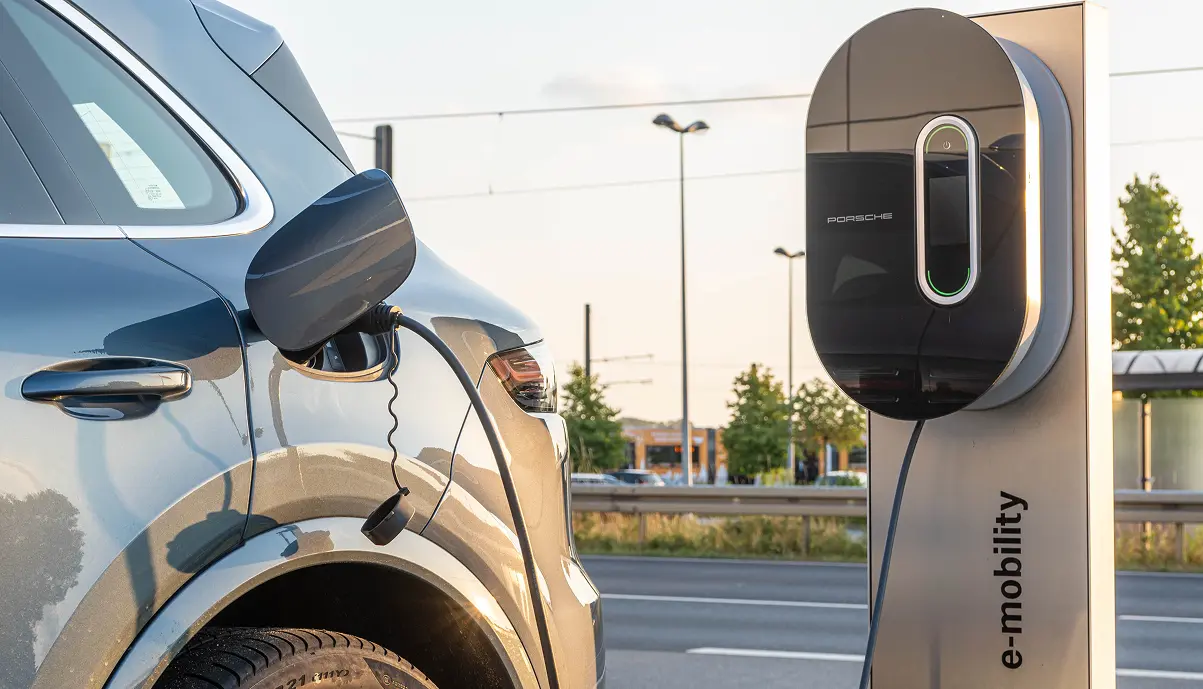
Porsche replicated a similar logic with Porsche Destination Charging : 11 to 22 kW stations at high-end hotels, restaurants, golf clubs, or marinas, with free charging for Porsche customers. In both cases, the original logic is the same: the establishment receives branded equipment in exchange for visibility among a premium clientele—a model that remains valid as long as the equipment stays functional, maintained, and compliant.
Why these stations are no longer sufficient in 2026
Three developments are changing the game for hotels that have been equipped for a long time. First, the initial generosity of the manufacturers has tightened significantly: full equipment donations to new establishments have become the exception as Destination Charging networks have reached a sufficient size.
A more technical and urgent issue specifically concerns Tesla: the Wall Connector provided to hotels has a permanently attached cable with no detachable wall plug. However, the French electrical standard NF C 15-100 requires that public charging points feature a shutter system (known as a "Type 2S" socket) to prevent contact with live parts in the event of a damaged cable. This design has resulted in official Tesla chargers provided to hotels being "now declared non-compliant", according to Tesla Mag, which updated its article on the subject in June 2026. In practical terms, certified EV charging installers are increasingly refusing to work on these units, and an incident involving a non-compliant charger can complicate insurance claims, as explained by Roulez Serein in its analysis of the standard.
Finally, customer demand has shifted significantly. A charger restricted to a single brand no longer meets the expectations of a clientele where 53% of French travelers consider the availability of a charging station a deciding factor when choosing their hotel, much like free Wi-Fi was a decade ago. A single-brand, aging, or non-compliant installation becomes a point of friction rather than a selling point.
Identify your situation and the corresponding solution
Case 1: You are still tied to your current operator by a fixed lease
You have signed a provision or operating contract with a charging station operator for a fixed term, and that commitment is still active. This is the most common situation for hotels equipped via a traditional third-party investor. Acting in haste (terminating the contract or removing the chargers yourself) exposes you to contractual penalties; it is better to anticipate the expiration date than to be caught off guard.
Solution: Six to twelve months before your contract expires, have a diagnostic assessment of your current installation performed: check the condition of the equipment, compliance, breakdown history, and exit or automatic renewal clauses. This foresight allows you to transition to a new solution without any service interruption.
Case 2: Your operator has failed to meet its commitments and your contract allows for termination
Broken charging stations left unrepaired, lack of supervision, and incorrect customer billing: when contractual service levels are not met, some agreements include a termination clause for breach of contract. While this is a faster exit strategy than waiting for a lease to expire, it must be based on the exact terms of the signed contract to avoid putting yourself in the wrong.
Solution: Before invoking a breach of contract, gather concrete evidence of non-compliance (outage logs, written correspondence, disputed invoices) and carefully review the clauses regarding early termination, formal notice, and notice periods. These rights vary significantly from one contract to another; any attempt to terminate for cause should be handled with the support of your legal or commercial department, rather than based solely on dissatisfaction, however legitimate it may be.
Case 3: You financed and installed your own charging stations
You purchased and installed your charging stations a few years ago using your own funds, representing an investment typically between €3,000 and €5,000 per charging point. The equipment works, but maintenance, supervision, and any necessary upgrades are entirely your responsibility. This is the easiest situation to change, as no third-party contract governs it.
Solution: there is nothing stopping you from transitioning this installation to a third-party investment model for hotel charging stations : an audit determines whether the existing equipment can be brought under supervision or needs to be replaced, after which the operator takes over maintenance and billing in exchange for a commission. You stop bearing the sole cost of equipment that has already been amortized.
Case 4: Your charging stations were provided by Tesla or Porsche and are no longer supported
You received your charging stations for free eight to ten years ago as part of a manufacturer program. Today, the equipment is approaching or has exceeded its technical lifespan (7 to 10 years under intensive use), has sometimes become non-compliant, and manufacturer support for these legacy units is minimal. Many hoteliers are now regretting this: charging provided to the brand's customers was billed entirely to their own general meter, which can amount to several thousand euros in electricity costs per year for the hotel. Adding a MID-certified sub-meter, such as the one integrated into the Qobox P, solves this exact problem by isolating that consumption. This situation affects a growing number of establishments equipped during the first wave of these programs.
Solution: as with self-financed stations, switch to a third-party investor who will handle the removal of old, non-compliant, or end-of-life equipment and the installation of a universal professional charging station compatible with all electric and plug-in hybrid vehicles. This is the perfect opportunity to break free from dependence on a single manufacturer's ecosystem.
Third-party investment: an option even for replacing an existing installation
Third-party investment is a model where an operator like Qovoltis finances, installs, and operates the charging stations on behalf of the hotel, earning revenue through a commission on each charging session. The establishment pays nothing and no longer has to manage maintenance.
What Qovoltis takes over, and what the hotel no longer has to finance
The third-party investment model we apply to new installations works exactly the same way for taking over existing charging stations: a free diagnostic of the installation and current contract, removal of non-compliant or end-of-life equipment, and then the installation, supervision, and maintenance of new professional charging stations, all without the hotel having to provide any capital upfront. For example, we deploy the Qobox P, wall-mounted, compatible with all vehicles, equipped with a MID-certified meter, and backed by a 7-year warranty.
In exchange for the takeover, Qovoltis collects a 5 to 10% commission on each session and handles equipment replacement at the end of its lifecycle.
What changes in practice: electricity bills, supervision, and customer experience
With chargers provided by a manufacturer, the gift covered the equipment, not the energy consumed: the electricity bill remained the hotel's responsibility, often without a dedicated meter to distinguish it from general consumption. With a charger equipped with a MID meter, this consumption becomes measurable item by item and billable session by session, with no management required for the hotel: every charge is recorded precisely and can be verified at any time. For the customer, access also becomes universal via card or app, regardless of the brand of the vehicle parked in the space.
FAQ: replacing your hotel charging stations
Can Tesla or Porsche chargers be replaced before the end of their service life?
Yes, there is no requirement to wait for the theoretical end of a charger's life to replace it. It is actually recommended as soon as the equipment is declared non-compliant, as is the case with Tesla chargers officially gifted to hotels under the Destination Charging program. The only essential preliminary check concerns your current contract: lease, exclusivity commitment, or any potential renewal clauses.
What happens to the current contract if we switch charging station operators?
This depends entirely on the signed clauses: commitment duration, notice period, early exit conditions, or termination for breach. There is no general rule applicable to all contracts: any decision to terminate must be validated by your legal or commercial department before being implemented.
Who pays for the electricity if the chargers were provided by Tesla or Porsche?
The manufacturer's gift covered the charging equipment, not the energy consumed: the electricity bill generally remains the hotel's responsibility, charged to its existing meter. This is a point that changes significantly with a dedicated MID-certified meter, which allows for the precise measurement and billing of each session.
Does third-party investment also work for replacing already installed chargers?
Yes. The third-party investment model (zero investment for the hotel, commission per session for the operator) applies just as well to an establishment that is not yet equipped as it does to one that wishes to replace an existing installation, regardless of its origin (manufacturer chargers, self-funded chargers, or chargers from a failing operator).
Key takeaways
- Replacing hotel charging stations is becoming an increasingly common issue: lease expirations, failing operators, self-funded stations in need of upgrades, or legacy Tesla/Porsche stations that are now non-compliant or at the end of their service life.
- Tesla stations officially gifted to hotels as part of the Destination Charging program are now considered non-compliant with the French NF C 15-100 electrical standard, regardless of their age.
- Before terminating any agreement, the only general rule is that there is no rule: every contract has its own exit clauses, which should be reviewed by your legal or commercial department.
- The Qovoltis third-party investment model (€0 investment, 5–10% commission per session) applies just as well to initial installations as it does to taking over an existing fleet, regardless of its origin.
- The electricity bill for stations provided by a manufacturer has always been the hotel's responsibility: what changes with a dedicated MID meter is the ability to measure and bill for it accurately.
Learn more
- Hotel charging stations: the complete guide by Qovoltis (for an initial installation)
- Qovoltis solutions for the hospitality industry
- The Qobox P station
Sources and references
- Tesla Destination Charging (official manufacturer program page)
- Porsche Destination Charging (official Porsche France page)
- Tesla Mag, Hotels: the benefits of the Destination Charging program (source of the non-compliance notice, updated June 2026)
- Drive with Peace of Mind, are Tesla Wall Connectors banned in France? NFC 15-100 standard, shutters, and solutions (technical explanation of the NF C 15-100 standard)
- Qovoltis, 1,000 sites equipped with charging stations (figures cited regarding the hotel industry and traveler behavior)
Article written in September 2026. Information verified as of the date of publication. This article is provided for informational purposes only and does not constitute legal or tax advice.

