Updated 09/11/2026
Introduction
More and more guests are arriving in electric vehicles and asking where they can charge during their stay. Some even check for charging stations before booking: on Booking.com , for example, a dedicated filter allows users to display only equipped properties. A hotel without a charging station is likely missing out on bookings without even realizing it, as these guests simply don't see the property appear in their search results.
Many hoteliers recognize the value but are deterred by the investment: equipment, installation, electrical connection, and multi-year maintenance. Third-party investment directly addresses this hurdle. Here is how this model works in practice, what it brings to the hotel, and what remains the hotel's responsibility.
What is third-party investment for charging stations?
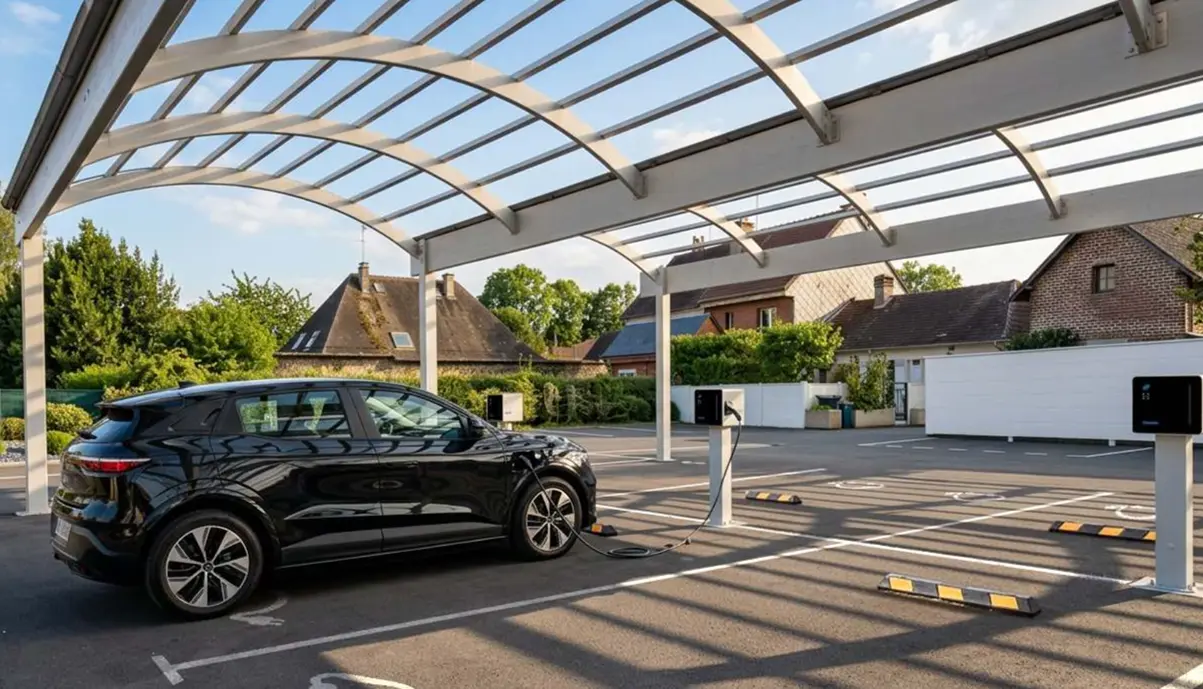
In this model, the operator, Qovoltis, finances, installs, supervises, and maintains the charging stations at its own expense, typically using remotely managed AC charging stations. The hotel pays nothing: it simply provides the parking space.
Regarding the electrical connection, Qovoltis prefers installing a new dedicated Enedis meter, known as a new delivery point (PDL), and handles all procedures with Enedis. When this is not possible—for example, in an underground parking garage or if the distance to the connection point is too great—the stations are powered by the hotel's existing meter; the electricity consumed is then measured and reimbursed to the establishment.
In exchange for this equipment, the operator collects revenue from charging sessions and pays a commission back to the hotel. To learn more about the technical and practical aspects, the complete guide to hotel charging stations covers the entire subject in detail.
How does the charging station operator get paid?
The operator earns revenue from the charging sessions billed to end users. The operator sets the rates and collects the majority of the revenue generated, from which they then pay a commission to the hotel, typically ranging from 5% to 10% depending on the contract.
This revenue depends directly on site traffic: the more the stations are used, the more both the operator and the hotel earn. This is also why not all hotels are automatically eligible for the program: the economic model must be viable for the operator to agree to fund the installation.
What happens to the charging station at the end of the contract?
This is often the question that worries hoteliers the most. Third-party investment contracts are established for a period of several years. Upon expiration, the establishment has two options: purchase the stations at their net book value to become the full owner, or renew the contract to continue benefiting from the supervision and maintenance of the charging infrastructure.
Requirements for the hotel
Before signing, the hotel must meet several conditions.
- A suitable parking area, capable of accommodating the charging stations under proper usage and safety conditions.
- Sufficient traffic volume to ensure the site is profitable for the operator; you can check your eligibility with Qovoltis.
FAQ
Can I set the charging rates under a third-party investment model?
No. The operator sets the rates charged to customers, as they finance, operate, and bear the commercial risk of the equipment. The hotelier does not need to define a pricing structure; they receive a commission based on the rates charged.
What happens if the charging station breaks down?
Maintenance is included in the contract. The operator handles repairs at no cost to the hotel, and remote monitoring often allows us to detect issues before a customer even reports them.
Are all hotels eligible?
Not necessarily. Eligibility depends on factors such as the number of rooms, the number of parking spaces, and the estimated traffic at the site. Each request is subject to a feasibility study.
Will the charging stations be connected to my electricity meter?
Qovoltis prefers to install a new, dedicated Enedis meter for the charging stations. When this is not possible—for example, in underground parking lots or if the distance to the connection point is too great—the stations are powered by your existing meter. In this case, the electricity consumed is measured and reimbursed to the hotel.
Can I get a preferential rate as a hotel owner?
Terms depend on each specific site (traffic, location, number of stations). This can be discussed directly with the Qovoltis sales team, who will review your project and propose terms tailored to your needs. Book an appointment with the sales team.
How long is the commitment for a third-party investment contract?
Third-party investment is based on a multi-year commitment contract. The exact duration is not standardized; it is determined with the sales team based on your specific site.
Key takeaways
- Cost for the hotel : €0. Qovoltis finances, installs, and maintains the charging stations; the hotel provides the parking space.
- Compensation : a 5% to 10% commission on charging fees billed to customers.
- Connection : a dedicated new Enedis meter is preferred, or an existing meter with reimbursement for electricity consumed if that is not possible.
- Commitment period : several years, determined with the sales team based on the site.
- End of contract : option to purchase the charging stations or renew the agreement.
- Deployment : 8 to 10 weeks with an existing meter, up to 18 weeks if a new Enedis delivery point (PDL) is required.
- Eligibility : depends on the site's projected traffic, confirmed after a site visit.
Learn more
For a comprehensive overview of the technical, regulatory, and practical aspects of charging in the hospitality industry, check out our complete guide to hotel charging stations. The Qovoltis offer also covers campsites and golf courses, using the same third-party investment model tailored to each type of site.
Third-party investment is more than just a theoretical concept. At Maison Obono, a hotel featuring a spa and restaurant, installed charging stations through a third-party investment model, generating over 500 charging sessions and attracting more than 90 new customers. These guests spent a total of 229 hours at the spa and restaurant while their vehicles were charging. As Benjamin Debout, the hotel's manager, summarizes: "We didn't pay anything for the installation. It's a premium service that doesn't require any effort from our staff."
Sources and references
- Qovoltis, Charging solutions for hotels
- Qovoltis, Hotel charging stations: the complete guide
- Enedis, What does PDL mean?
Article written in September 2026. Information verified as of the date of publication. This article is provided for informational purposes only and does not constitute legal or tax advice.