Updated on 06/15/2026
Introduction
With 147.5 million overnight stays recorded in 2025, French campsites are seeing an increase in visitors thanks to an influx of French and European tourists. This booming sector is attracting an evolving clientele: more and more campers are arriving in electric vehicles, and they have a simple need: to charge on site.
Unlike urban areas, campsites are often far from public charging networks. For these drivers, the presence of a charging station at the campsite is not just another service; it's a condition for booking.
This guide helps you understand why equipping your campsite has become essential, how much it costs, and how it works in practice with Qovoltis.
Why equip your campsite with charging stations?
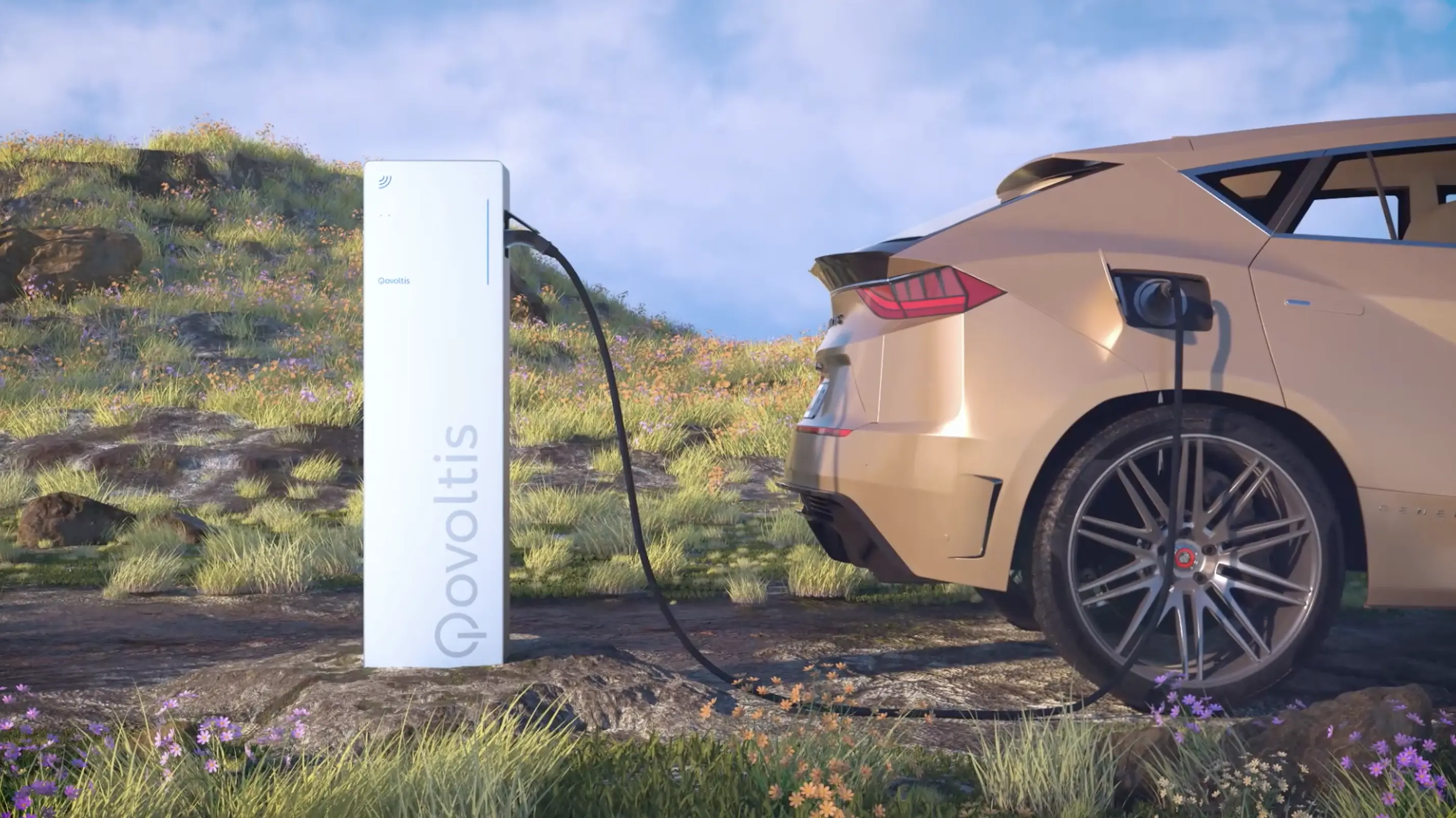
An electric clientele looking to charge before booking
Today, there are over 2 million plug-in vehicles in circulation in France, and this number doubles every two years. These drivers have a constraint that internal combustion vehicle owners do not: they must plan their charging stops in advance, especially outside major cities.
A campsite in a rural area, mountains, or by the sea is rarely covered by the public charging network. The result: the campsite becomes the only available charging point during the stay. If no charging station is available on site, the camper chooses another establishment.
The presence of an electric vehicle charging solution at a campsite is also a crucial selection criterion. Many holidaymakers check the availability of charging stations even before booking their stay and prefer establishments that clearly advertise this service. A charging station can thus make the difference when choosing between two similar campsites.
Equipping your site also means gaining visibility on listing applications like ChargeMap, which offers the reference mapping for finding charging stations. This presence generates additional traffic beyond just campers booking a pitch.
A commercial reality before it becomes a legal obligation
Most campsites, as SMEs, are not currently legally obliged to install charging stations. While the LOM law mandates 1 charging point per 20 parking spaces for non-residential car parks with more than 20 spaces, many campsites do not meet these thresholds or benefit from exemptions applicable to small businesses.
The real reason to equip yourself is elsewhere. An electric vehicle camper who can't find an available charging station won't book. And with the electric vehicle fleet doubling every two years, this phenomenon will only accelerate.
Equipping now means attracting this growing customer base, getting a head start on competitors who are waiting, and allowing your holidaymakers to leave with a fully charged car, stress-free, after their stay.
For campsite groups or establishments meeting the legal thresholds, here is the exact obligation: the LOM law mandates a minimum of 1 charging point per 20 parking spaces since January 1, 2025. To fully understand the application of the LOM law to campsites and their car parks, consult our dedicated article.
A competitive advantage and an additional revenue stream
Each charging session generates revenue. Over a 7 to 8-month season, with a growing electric and hybrid customer base each year, charging stations become a complementary revenue stream directly linked to campsite occupancy. It's also a strong signal for campers who are environmentally conscious, a profile overrepresented among customers of certified campsites (Green Key, EU Ecolabel).
A dedicated meter: zero impact on your electricity bill
Without a dedicated charging station, a camper who charges their vehicle using a standard campsite outlet consumes directly from your electricity meter. You pay for the electricity, with no visibility into who is consuming what, and no possibility of re-billing.
Qovoltis installs an electricity meter dedicated to charging stations, independent of the campsite's existing installation. The result: your electricity bill is no longer impacted. You no longer have to worry about campers secretly plugging into an outdoor outlet, nor monitor your overall consumption.
What is the cost of installing an EV charging station at a campsite?
The cost depends on the number of charging stations, the power selected, and the operating model. Two main options are available.
With our third-party investment model, Qovoltis finances, installs, supervises, and maintains the charging stations at its own expense. In return, you provide the necessary parking space and receive a commission of approximately 5% on each charging session.
This model is chosen by many establishments that want to equip themselves without allocating an investment budget.
Choosing the right charging station and structuring your charging offer
Fast charging vs. slow charging: what do we recommend for a campsite?
The unique aspect of camping is the length of stay. A camper parks for several nights at their pitch. Nevertheless, Qovoltis recommends 22 kW charging stations for campsites.
Why? Because the actual power delivered depends on the vehicle's onboard charger: depending on the model, charging will occur between 11 and 22 kW. A 22 kW charging station therefore adapts to all vehicles, from the most common to the most recent, without ever being a limiting factor. In a 7-hour night, a vehicle that accepts 11 kW recovers approximately 77 kWh, which is more than enough to leave with a full battery, knowing that on average, a full charge for an electric car is around 68 kWh.
It's also the most suitable solution for motorhomes, whose energy needs are greater than those of other light vehicles.
To understand everything about the different types of charging stations, consult our dedicated article.
How to charge your campers for EV charging?
Three models coexist:
- Free, included in the pitch price: a strong selling point, especially for high-end campsites.
- Nightly package, between €5 and €10 per vehicle per night: easy to integrate into billing at reception, without requiring a payment system on the charging station.
- Per session via badge, card, or mobile app.
With Qovoltis' third-party investment model, the management system automatically handles access, pricing, and billing, so you don't have to manage anything. Your employees can continue to focus on the campsite, without having to manage the charging stations.

Case study: a 200-pitch campsite
A 200-pitch campsite (including 40 bungalows, and therefore 40 parking spaces), with a season from April to November, located 40 km from the nearest public charging station, is obligated to install at least 2 charging points (1 per 20 parking spaces) in accordance with the LOM law.
By opting for Qovoltis' third-party investment model:
- Installation of 2 charging stations: €0 investment
- Monitoring, maintenance, and access management: handled by Qovoltis
- Rate charged: €0.49/kWh, or €10 to €12 per full session
- Commission paid to the campsite: 5% per session
During peak season, with an occupancy rate of 70% and 10% of campers with electric vehicles, the 2 charging stations record 10 to 15 charging sessions per week, representing a smoothed average of approximately 200 sessions per year.
However, the main benefit is not financial. An EV camper who knows they can charge on-site will book without hesitation, extend their stay with peace of mind, and leave with a full battery. It's a frictionless stay experience, which concretely translates into better ratings on booking platforms, fewer abandoned bookings due to searching for a charging station, and stronger loyalty in subsequent seasons.
In summary: charging stations are a direct driver of attractiveness and customer satisfaction.
FAQ
What is the installation cost for a charging station at a campsite?
The price depends on the chosen model. With a direct investment, the installation cost varies between €3,000 and €5,000 per charging station, plus a monitoring subscription of €10 to €15 per month.
With Qovoltis' third-party investment model, installation is free: Qovoltis covers all costs in exchange for a 5% commission on each charging session for the campsite.
Can I open the charging stations to the public?
The decision is entirely yours. You can choose to reserve the charging stations exclusively for your customers, or you can make them accessible to the public. They will automatically appear on listing applications like ChargeMap, which generates additional traffic to your site.
How long does it take to install charging stations at a campsite?
For campsites, due to the requirement for a new Enedis connection point (PDL), the installation process takes approximately 18 weeks from the contract signing date.
Is there specific aid for campsites for charging station installation?
Direct national subsidies like ADVENIR will no longer be available for campsites in 2026. Some regions offer co-financing as part of sustainable tourism programs: inquire with your regional council.
The Energy Savings Certificates (CEE) may also be valuable depending on your establishment's legal structure.
The Qovoltis third-party investment model remains the most direct solution: no upfront costs.
How do I list my campsite on charging applications?
As soon as they are commissioned, Qovoltis charging stations can be listed on Chargemap and the main charging platforms, offering immediate visibility to passing electric vehicle drivers. With the Qovoltis third-party investment model, all these steps (listing, supervision, and interoperability) are fully managed.
Key takeaways
With 147.5 million overnight stays in 2025, French campsites have never been busier. And the number of guests arriving in electric vehicles is constantly growing. Equipping your campsite with charging stations means meeting a real need, complying with the LOM law, and generating additional revenue from your parking lot.
The Qovoltis third-party investment model allows you to get equipped for free, with a commission paid on each session.
Before the next season, now is the time to decide.
To learn more
Sources and References
- ActuHPA - FNHPA Reveals Number of Overnight Stays at Campsites in 2025
- Avere France - Barometer of Electric and Plug-in Hybrid Vehicle Registrations, December 2025
- Green Key - Sustainable Tourism Label
- EU Ecolabel
- Chargemap - Electric Vehicle Charging Stations
- Légifrance - LAW No. 2019-1428 of December 24, 2019, on Mobility Orientation
- Ecological Transition for Businesses - Energy Savings Certificates (CEE)